 Rooftop Cypher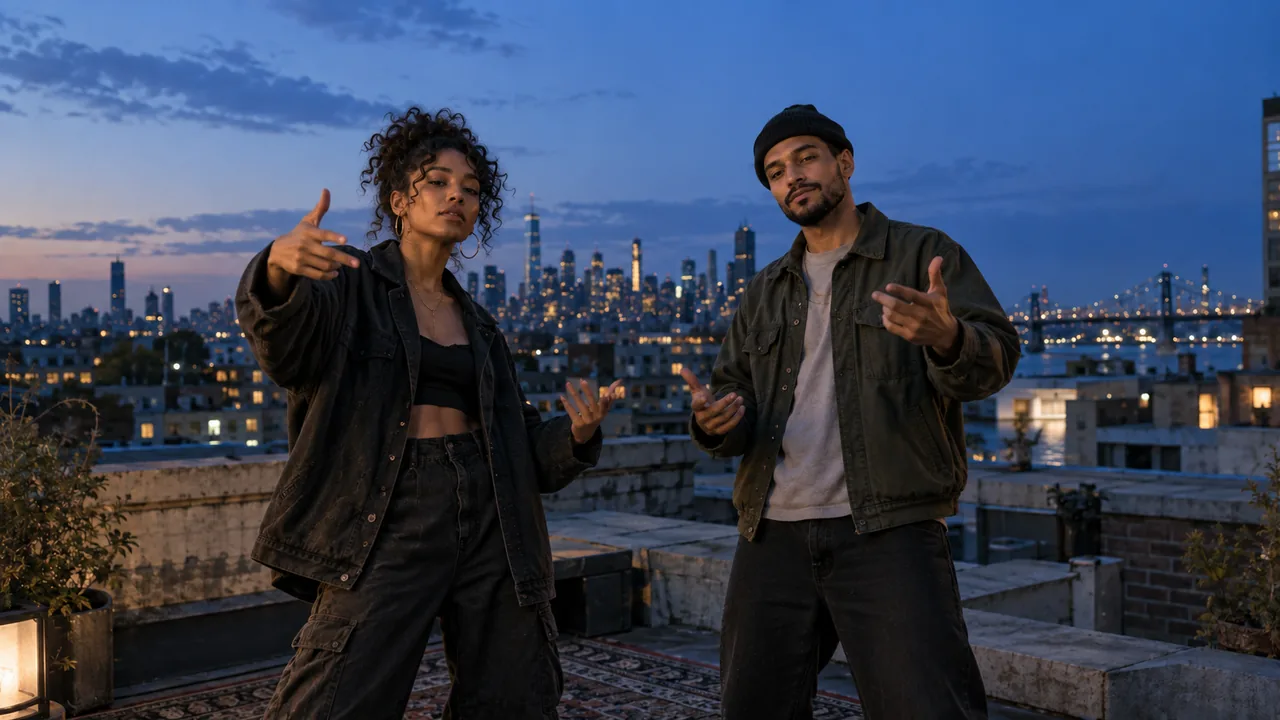
Choose a reference for this scene
The rooftop scene uses two performers, a distant skyline and the transition between cool evening light and a warm practical lamp. The pair remains the subject; the city gives the frame scale. A light breeze and alternating performer attention are part of the intended visual direction.
The pair at a similar distance
Use one individual portrait for each performer, with comparable face size and clear upper-body detail. Both references should be readable rather than leaving one person tiny in the distance.
Unobstructed face outlines
Avoid hats, hair or raised hands hiding the eyes and cheek lines. Both faces need useful detail for changes between wider and closer framing.
Clothing with a clear silhouette
Include shoulders and enough torso to show the outfit. Distinct edges help you judge whether the clothes and arms remain coherent in generated movement.
Exposure before atmosphere
You do not need a real roof or sunset photo. Well-lit individual portraits are preferable to dark skyline photos in which faces are only silhouettes.
Photos to avoid
- A dangerous real rooftop-edge pose used just to match the setting.
- A sunset backlight that leaves both faces almost black.
- Raised hands crossing another person’s face or body.
From source portraits to a reviewed clip
Prepare two permitted portraits
Use one person in each of two separate portraits. Obtain permission from every identifiable person to appear in a synthetic video. Choose a JPG, PNG or WebP up to 4 MB for each portrait, and inspect facial detail before upload.
Check the local preview
Choose each required file in its own studio slot. Selection creates local previews; it does not submit the images to storage or the video provider. Replace or remove a portrait if its subject, crop or file is wrong.
Choose the frame
Use 9:16 or 3:4 for portrait video, 1:1 for a square post, or 16:9, 4:3 or 21:9 for a wider scene. Changing the aspect ratio does not change the credit cost for the same duration.
Choose your video length
This scene defaults to 10 seconds in 9:16. Your account stores credits; package cards show the video time they cover. A 15-second clip uses more credits than a 10-second clip. Unused credits stay in your balance, and you need enough for at least 10 seconds to start a new video.
Confirm permission, then generate
Use Generate only when the live service is available. The flow connects your account or guest session, uploads the required portraits in slot order and sends the scene request. Complete verification if it is required.
Recover the same task when uncertain
If the response is slow or unclear, use Check progress for the saved task instead of repeatedly starting new requests. Return with the same browser session when possible. An unknown response does not establish that the job failed.
Play the whole result
When the task completes, play the full video and inspect the scene-specific checks below. Save the result while its link is available. Starting another video uses additional video seconds.
What to check in the completed video
Compare both skin tones
Check that neither face disappears into blue shadows and that the two people remain distinguishable.
Inspect gestures frame by frame
Watch fingers and forearms during any close view. A convincing skyline does not make distorted hands acceptable.
Check background continuity
Look for drifting railings, changing building shapes or wardrobe edges that detach from the body.
When the result misses the intention
Faces disappear into the cool lighting
Use a source with clean, even face exposure for a new render. A dark outdoor reference adds uncertainty to an already atmospheric setting.
One performer looks much smaller
Replace a photo with mismatched perspective using a more balanced pair image. Keep both subjects equally readable.
Clothes or fingers move oddly
Try a source with clear garment edges and relaxed hands. Then review the full result rather than judging only the opening still.
Questions before you start
Do I need to take a photo on a roof?
No. Start with a clear photo of the two people together. The effect requests the rooftop environment from that reference; you do not need a risky or poorly lit location photo.
Does choosing a file upload it immediately?
No. File selection creates a local preview. A live Generate request uploads the source to configured storage and sends its reference to the video service after permission confirmation.
Should I generate again if the request looks stuck?
Check the saved task first. A slow or uncertain response can still belong to an active job. Starting another video uses additional video seconds.
MAKE YOUR SCENE